The post Mediterranean Diet Review: What It Is, Evidence, Cost, Pros & Cons appeared first on Rating Diet Plans.
]]>Verdict (Quick Take)
Good for: long-term health, eating out, family meals, cooking from scratch, and anyone who has come off restrictive programmes and regained.
Weak for: fast weight loss, anyone who does not cook, and anyone who wants a rule they can follow without judgement.
The Mediterranean pattern has the strongest long-term health evidence of anything we have reviewed, and it is the only plan in our set with nothing to come off. It is also not primarily a weight-loss diet, and we have scored it that way rather than pretending otherwise.
What we scored
There is no canonical Mediterranean text, so under our method we score the most widely circulated version and name it. We scored the Oldways Mediterranean Diet Pyramid, the codification most consumer descriptions derive from, which specifies frequencies — every meal, weekly, less often — rather than leaving the pattern purely descriptive.
This matters, because the trial evidence tests something narrower. The major trials supplied extra-virgin olive oil or mixed nuts at intake levels most self-directed followers will not reach. A reader following the pyramid is not doing precisely what the trials tested, and we would rather say so than let the evidence carry more weight than it should.
The pyramid includes wine in moderation. Our method says score the plan as designed, so we have scored that rather than setting it aside.
Safety & evidence — 4.5
The best-supported eating pattern in our set: randomised trial evidence, consistent long-run epidemiology, and professional-body consensus. Nothing here conflicts with established physiology, nothing is eliminated, and no phase requires supervision.
Two things hold it off a 5. Our top anchor requires no notable population-level cautions, and the wine component is one — relevant in pregnancy, in alcohol use disorder, and alongside several medication classes. The evidence base also carries a methodological caveat significant enough that we would not state the headline effect without qualification.
There is no vendor here, so under our method the absence of published contraindications would ordinarily count against the plan. It counts less than usual, because the pattern is non-restrictive and endorsed by bodies that do publish cautions — but a reader following a pyramid diagram is being warned about nothing by nobody, and that is worth half a point.
Nutrition quality — 4.5
Meets our top anchor on nearly every count: broad variety, no eliminated food groups, no predictable micronutrient gaps, no supplements required, and no branded products displacing whole food.
What holds it at 4.5 is total fat, which routinely sits above established upper ranges even though it is predominantly unsaturated. That is our 4-anchor language exactly — one macronutrient consistently at the edge of recommended ranges — against 5-anchor performance everywhere else.
Sustainability — 5.0
Our first 5.0 on any criterion, and we think it is the right one.
There are no phases, no end point, no subscription and no compliance mechanism. There is nothing to come off, because it was never a programme to be on. It handles restaurants, travel, holidays and family meals better than anything else we have scored, because it is an ordinary way of eating rather than an intervention.
The one point of friction is cultural fit: the pyramid is specifically Mediterranean, and a reader whose home cuisine is elsewhere is adapting principles rather than following a menu. We note it, but we do not deduct for it — the principles transfer readily, which is more than can be said for a plan built on branded products.
Results — 4.5
Scored on health outcomes. The Oldways pyramid presents itself as a heritage eating pattern for health rather than as a weight-loss programme, so under our method it is scored on the health anchors, and we say so rather than leaving you to work it out.
On hard endpoints the evidence is the strongest in our set, with randomised trial data and follow-up well beyond twelve months. That is our top anchor.
What holds it at 4.5 rather than 5.0 is a methodological qualification on the single strongest trial, significant enough that we would not quote its headline effect without saying so. The breadth of supporting evidence does not rest on that one trial, which is why this sits between two anchors rather than dropping a full band.
Weight loss on this pattern is modest, because the trials were largely conducted without energy restriction. If you are here primarily to lose weight quickly, that is the honest answer, and it is not what this score measures.
Cost & value — 4.0
No fee, no subscription, no required products and no lock-in — and, per our method, that does not make it free to follow.
Extra-virgin olive oil, fish twice weekly and regular nuts push the shop above a normal food budget by roughly $25–75 a month for a single adult, which is our band 4. Substitution keeps it there: tinned fish, dried legumes, frozen vegetables and own-brand oil all work, and displacing red meat with legumes claws back part of the increase.
There is no downward adjustment, because there is nothing to cancel.
User experience — 3.5
Almost no daily burden — no weighing, no logging, no tracking, no app, and nobody to report to. On burden alone this would score at the top.
It loses ground on clarity. The rules are frequency-level rather than quantity-level, and ordinary questions do not have clean answers: how much oil counts as the primary fat source, how often is occasionally, is this loaf whole grain enough. A beginner without nutrition knowledge can follow the pattern approximately but not precisely, and significant cooking is required most days.
How it compares
| Plan | Safety | Nutrition | Sustain. | Results | Cost | UX | Overall |
|---|---|---|---|---|---|---|---|
| Mediterranean Diet | 4.5 | 4.5 | 5.0 | 4.5 | 4.0 | 3.5 | 4.5 |
| Jillian Michaels “The Fitness App” | 4.0 | 4.0 | 4.5 | 3.5 | 4.5 | 4.0 | 4.1 |
| WeightWatchers | 4.0 | 4.0 | 3.5 | 4.0 | 3.5 | 4.0 | 3.9 |
| South Beach Diet | 4.0 | 3.5 | 3.5 | 3.0 | 3.0 | 3.5 | 3.5 |
| Nutrisystem | 4.0 | 3.0 | 2.5 | 4.0 | 2.0 | 4.5 | 3.4 |
| Dukan Diet caution | 1.5 | 1.5 | 1.5 | 3.5 | 3.0 | 2.0 | 2.0 |
At 4.4 this is the highest-rated plan we have reviewed. It earns that on sustainability and evidence rather than on weight loss, which is what our weighting is designed to reward.
The post Mediterranean Diet Review: What It Is, Evidence, Cost, Pros & Cons appeared first on Rating Diet Plans.
]]>The post WeightWatchers Review: Points Programme, Pricing, Evidence, Pros & Cons appeared first on Rating Diet Plans.
]]>Quick Verdict
Good for: flexible long-term eating, people who want structure without banned foods, anyone who doesn’t mind logging their food.
Weak for: people who hate tracking, anyone wanting rapid loss, and anyone assuming the advertised price is the price they’ll pay.
WeightWatchers Core is the best-evidenced commercial programme we have reviewed, and the only one where a meaningful share of the supporting research was not produced by the company selling it. Nothing is off-limits, no proprietary food is required, and the plan is built for indefinite use rather than a finite push. Its two real weaknesses are honest ones: the daily logging never stops, and the five-year data shows most of the early loss coming back.
Scope of this review: we scored Core, the digital Points programme. Core+ and Med+ (the medically supervised GLP-1 tier) are described further down but are not part of this score. We rate diet plans; Core is one, and it is scored entirely on its own merits. Med+ requires prescription medication, which we treat differently — see our medication policy.
What It Is
A points-based eating programme with app tracking, community support and optional workshops. Every food carries a Points value driven mainly by protein, fibre, sugar and saturated fat. Each member gets a personal daily and weekly budget sized to their body, age and goals. Nothing is forbidden — you spend the budget how you like.
More than 350 foods carry zero points and need no tracking at all: most vegetables, fruit, lean protein, legumes, eggs and plain fat-free yoghurt.
How the Points Programme Works
The formula pushes eating patterns toward nutrient density without prescribing a menu. Protein and fibre pull a food’s Points value down; sugar and saturated fat push it up. The practical effect is that a day built on whole foods costs fewer points than the same calories from packaged food.
Members choose between three Modes, which reconfigure the budget:
- All-in — a stricter short-term jump-start. No weekly flex points, no activity points, no rollovers.
- Lose — the standard configuration most members use, with daily and weekly points, rollovers and activity points.
- Maintain — a larger daily budget and more flex points for holding at goal weight.
Building maintenance in as a designed mode rather than an afterthought is a genuine structural strength, and one most commercial plans don’t bother with.
Pricing (July 2026)
| Tier | Price | What you get |
|---|---|---|
| Core | from ~$12/mo on a 12-month plan | Points programme, app, recipes, food database, member community |
| Core+ | from ~$22/mo on a 12-month plan | Core plus expanded workshops, GLP-1 Success Program, menopause path |
| Med+ | ~$25 first month, then ~$74/mo | Clinician access for GLP-1 prescribing. Medication cost not included. |
The advertised price is not the price most people pay
Core’s headline rate applies inside a 12-month commitment that auto-renews. Outside that commitment the real rate is closer to $23/month, and a $20 starter fee applies to month-to-month sign-ups. Promotional rates are common and change often; check what your plan renews at, not what it starts at.
How We Scored It
Scored against our published rubric. Six criteria, weighted, calculated rather than assigned.
Safety & evidence — 4.0
WW has the deepest evidence base of any commercial diet we have reviewed, and unusually, a meaningful share of it is independent of the company. Systematic reviews of commercial weight-loss programmes have repeatedly found WW producing statistically significant weight loss over usual care at twelve months — a bar most commercial programmes fail when someone other than the vendor is counting. A 2025 randomised trial in the American Journal of Clinical Nutrition adds current evidence, and reported improvements in diet quality alongside weight loss rather than weight loss alone.
Nothing about the design is dangerous. No food groups are eliminated, no caloric floor is imposed, and there is no unsupervised very-low-calorie phase.
It stops at 4.0 for one reason: continuous point-tracking is the mechanism of the programme, and daily quantified self-monitoring of food carries a documented concern for people with a history of disordered eating. WW’s consumer-facing materials do not flag this prominently at the point of sign-up.
A note on the evidence base. The strongest independent syntheses supporting WW are now around a decade old and predate the current Points formula, the Modes structure and the app as it exists today. The 2025 trial is current but is a single study. Read the independent evidence as strong for the WW approach and thinner for the specific 2026 product.
Nutrition quality — 4.0
The Points formula rewards protein and fibre and penalises sugar and saturated fat, pushing eating toward nutrient density without prescribing a menu. The ZeroPoint list leans on foods mainstream guidance already wants people eating more of. No supplements are required, and Core sells no proprietary food products, so nothing displaces whole food from the plate.
It falls short of 5.0 because a points budget is a constraint, not a diet. Someone can spend an entire daily allowance on packaged convenience food and remain fully compliant. We score the plan as designed rather than as a disciplined person would follow it — and as designed, WW permits a poorly balanced week. The formula makes that harder than it would otherwise be, which is why this sits at 4.0 rather than lower.
Sustainability — 3.5
Design and outcome pull in opposite directions here, and the score reflects the tension rather than resolving it in WW’s favour.
The design case is strong: no phase you have to come off, no end date, a maintenance mode specified in real detail, and enough flexibility to handle restaurants, travel and family meals. Nothing is banned, which removes most of the social friction that makes restrictive diets awkward to eat around other people. On design alone this would score 4.5.
The outcome case is weaker. The UK’s WRAP trial followed roughly 1,267 adults for five years across a 52-week WW referral, a 12-week referral and a control group. WW participants lost more at one year. By five years the 52-week group was around four pounds lighter than controls, and the difference was not statistically significant. Most of the early advantage did not hold.
A plan built for indefinite use that most people nonetheless drift off is a 3.5 — sustainable in principle, sustained by a minority in practice.
Results — 4.0
Short- and medium-term results are well-evidenced and independently replicated. The 2025 trial found WW participants lost around 5.4% of body weight at six months against 1.5% for a standard-guidance control group, with substantially higher odds of reaching the 3%, 5% and 10% loss milestones. Independent systematic reviews support a real if modest advantage over usual care at twelve months.
That meets our 4.0 anchor directly: reliable short-term loss with reasonable evidence of retention at six to twelve months. It does not reach 5.0, which requires results substantially maintained beyond twelve months — the WRAP five-year data rules that out.
Worth being explicit about why the long-term regain doesn’t drag this to 3.0: that anchor describes a plan with little or no long-term follow-up published. WW’s situation is the opposite — it has more long-term follow-up than almost anything in this category, and the data is mixed rather than absent. Penalising a programme for having been studied long enough to show its limits would reward every plan that never ran a five-year trial. The durability problem is real, and we score it under Sustainability.
Cost & value — 3.5
The subscription itself is modest, and no food purchases are required at the Core tier. But we score the total cost of following a plan, food included, against a normal food budget — and the Points formula does gently raise a grocery bill. The ZeroPoint list runs on lean protein, fresh produce and plain yoghurt, and the formula penalises the cheap calorie-dense staples that keep a food budget low. Nothing is mandated, so this is far softer than a plan requiring branded products, and nowhere near what a high-protein plan like Dukan adds. But it is not nothing.
Subscription plus a modest grocery effect places WW in the second band. The 12-month auto-renewing commitment — headline pricing that requires a long prepaid term — then triggers our downward adjustment, landing this at 3.5.
Don’t read 3.5 as a warning. This is not an expensive programme and it is fairly priced for what it delivers. The score reflects that the advertised number is not the number most people pay, and that the food rules carry a small cost of their own.
User experience — 4.0
The guidance is clear and the rules are unambiguous. A beginner can follow WW correctly from day one without prior nutrition knowledge, which is genuinely rare — the Points abstraction does real work, collapsing a complicated nutritional judgement into one number a person can act on. The rules cover the situations ordinary life produces: restaurants, travel, holidays, eating at someone else’s house. The app is capable, with photo-based logging, a large recipe and restaurant database, and point values for arbitrary recipes.
But tools are evidence, not the criterion — and the criterion is daily burden, where WW is genuinely demanding. Continuous food logging is not a feature of the programme; it is the programme. Every meal is a tracking event, indefinitely. The ZeroPoint list meaningfully reduces this and photo logging reduces the friction per entry, but the underlying requirement never goes away. Independent reviews and member feedback consistently identify tracking fatigue as the main reason people stop.
Clear guidance and low friction per action, set against a permanent daily logging requirement, is a 4.0. Periodic changes to the Points formula over the years are a recurring source of member frustration that cuts against the clarity the programme otherwise delivers.
Med+, Core+ and the GLP-1 Tiers
Not included in the score above, and worth understanding separately.
Core+ adds expanded workshop access, a menopause-specific path, and the GLP-1 Success Program — nutrition and side-effect coaching for people already prescribed GLP-1 medication elsewhere.
Med+ adds telehealth access to clinicians who assess eligibility, prescribe and adjust GLP-1 medications such as semaglutide and tirzepatide. Medication costs are separate and often substantial.
WW’s own figures don’t reconcile. One WW report describes GLP-1 Success Program participants losing 61% more weight at one month than medication alone; WW’s own pricing page separately states members pairing medication with Core lose 11% more. Different comparisons, different timeframes, both company-sourced, neither independently verified. We would not treat either as established.
Where we stand. Med+ requires prescription medication, and it is not scored here. That is not an oversight. Our six criteria measure food, eating patterns and behaviour change; under our medication policy a tier that requires a prescription to work as designed sits outside what those criteria can honestly measure. Rating it anyway would mean publishing a number substantially set by a component we have said we are not qualified to assess. What we can tell you is that the medication cost sits on top of the subscription, and that published evidence shows most lost weight returning within a year of stopping. That is our editorial position and a limit on our competence, stated plainly.
A note on weight-loss medication. RatingDietPlans rates diet plans. Where a programme offers prescription weight-loss medication, we note it, and we do not regard it as a point in the programme’s favour. This is our editorial position, not a clinical judgement — we are not qualified to make one — and it is kept out of our scores. It is not advice about your own medication. If you have been prescribed a weight-loss medication, decisions about starting, continuing or stopping it belong with your prescribing clinician and nobody else. See our medication policy.
Pros
- Strongest independent evidence base of any commercial programme we’ve reviewed
- No banned foods, no eliminated food groups, no required proprietary products
- Genuine maintenance mode built in, not bolted on
- 350+ ZeroPoint foods cut the logging load substantially
- Clear enough for a beginner to follow correctly from day one
- Handles restaurants, travel and family meals better than most plans
Cons
- Daily food logging is permanent and is the most common reason people quit
- Five-year data shows most early loss regained
- Advertised pricing requires a 12-month auto-renewing commitment; real rate is roughly double
- Points formula has changed repeatedly over the years, frustrating long-term members
- No prominent caution for people with a history of disordered eating
- Strongest independent research predates the current programme version
- Company increasingly steers members toward prescription medication tiers, which we don’t regard as an improvement to the programme
Who It’s Best For (and Who Should Skip)
Consider it if you want structure without restriction, you eat out or travel often, you’ve failed on plans that banned foods you like, or you want something you could still be doing in three years.
Skip it if daily tracking sounds intolerable — that is the whole programme, and no feature removes it. Also skip if you have a history of disordered eating, unless you’ve discussed food tracking with a clinician first; quantified daily self-monitoring is not neutral for everyone.
How It Compares
| Plan | Safety | Nutrition | Sustain. | Results | Cost | UX | Overall |
|---|---|---|---|---|---|---|---|
| Mediterranean Diet | 4.5 | 4.5 | 5.0 | 4.5 | 4.0 | 3.5 | 4.5 |
| Jillian Michaels “The Fitness App” | 4.0 | 4.0 | 4.5 | 3.5 | 4.5 | 4.0 | 4.1 |
| WeightWatchers | 4.0 | 4.0 | 3.5 | 4.0 | 3.5 | 4.0 | 3.9 |
| South Beach Diet | 4.0 | 3.5 | 3.5 | 3.0 | 3.0 | 3.5 | 3.5 |
| Nutrisystem | 4.0 | 3.0 | 2.5 | 4.0 | 2.0 | 4.5 | 3.4 |
| Dukan Diet caution | 1.5 | 1.5 | 1.5 | 3.5 | 3.0 | 2.0 | 2.0 |
WW has the strongest evidence in this set and the best Results score of any non-delivery plan we’ve reviewed. It sits just behind Jillian Michaels overall, largely on sustainability. On cost the two are closer than the headline prices suggest: Jillian’s app is about a month with no lock-in, no starter fee and cancellation any month, while WW’s cheapest rate requires a 12-month auto-renewing commitment.
FAQs
How much does WeightWatchers actually cost?
Core advertises from around $12/month, but that requires a 12-month auto-renewing commitment. Month-to-month is closer to $23/month plus a $20 starter fee. Core+ runs around $22/month on a commitment; Med+ is roughly $25 for the first month then $74/month, with medication billed separately.
Do you have to track every day?
Effectively yes. ZeroPoint foods don’t need logging, which removes a large share of entries, but the programme works by spending a points budget — and you can’t spend a budget you’re not tracking. This is the single biggest predictor of whether WW will work for you.
Is any food banned?
No. Every food has a points value and fits if you budget for it. That flexibility is central to why WW scores well on sustainability relative to restrictive plans.
Will the weight stay off?
Honestly — often not, on the five-year evidence. WW reliably beats usual care at one year. The WRAP trial found the advantage had largely disappeared by five years. That is a limitation of weight-loss programmes generally rather than WW specifically, but it’s worth going in with realistic expectations.
Do you need the GLP-1 tier?
No. Core is a complete programme and the evidence in this review is Core’s, not Med+’s — the trials that make WW well-supported studied the food-and-behaviour programme. Whether medication is appropriate for you is a medical question for your own clinician, not a subscription upgrade. Our view is that a plan requiring drugs is a weaker plan, but that view is about programme design and carries no weight at all against your doctor’s advice about your own treatment.
Bottom Line
WW Core eliminates no foods, requires no proprietary products, is built for indefinite use rather than a finite push, and is clear enough that a beginner can follow it correctly from the first day. It is among the safest choices in a category where that cannot be assumed.
Read the pricing carefully: the advertised rate depends on a 12-month commitment that auto-renews, and the real month-to-month figure is roughly double. If you can live with tracking your food most days, this is a well-built, fairly priced, genuinely evidence-based programme.
Disclaimer
This review is informational and not medical advice. Check with your clinician or a registered dietitian before starting any weight-loss programme — particularly if you are pregnant, managing diabetes or another condition, taking medication that interacts with weight change, or have a history of disordered eating. GLP-1 medications should only be started under medical supervision.
© 2026 by RatingDietPlans.com, All rights reserved. No part of this document may be reproduced or transmitted in any form or by any means, electronic, mechanical, photocopying, recording, or otherwise, without prior written permission.
The post WeightWatchers Review: Points Programme, Pricing, Evidence, Pros & Cons appeared first on Rating Diet Plans.
]]>The post South Beach Diet Review: Phases, Foods, Membership, Pros & Cons appeared first on Rating Diet Plans.
]]>Quick Verdict: A sensible lower-GI framework with a short “reset” followed by flexible maintenance. Good for appetite control if you’re willing to cook; not a turnkey meal-delivery program.
At a Glance
- Type: Lower-carb, glycemic-index–focused eating plan (not zero-carb)
- Created by: Cardiologist Dr. Arthur Agatston
- Structure: 3 phases — Phase 1 (~14-day reset), Phase 2 (reintroduction), Phase 3 (maintenance)
- Effort: Moderate — you’ll prep/cook most meals
- Convenience: No bundled meals; optional South Beach Living membership (coaching, app, on-demand fitness)
- Best for: Cutting refined carbs while keeping fruits/whole grains later
- Not ideal for: Anyone wanting a turnkey meal-delivery program
How the South Beach Diet Works
South Beach swaps high-GI “fast” carbs (sugary foods, refined grains) for lower-GI options (vegetables, fruit, whole grains, legumes) alongside lean protein and healthy fats. The goal is steadier energy, fewer cravings, and sustainable weight loss.
The 3 Phases (What to Expect)
Phase 1 (~14 days): Reset
- Temporarily cut fruit and most starches to curb sugar/refined-carb cravings.
- Base meals on lean proteins, non-starchy vegetables, and healthy fats.
- No alcohol or juice.
Phase 2: Reintroduction
- Add back fruit, whole grains, and starchy veggies in controlled portions.
- Remain here until you reach your goal weight.
Phase 3: Maintenance
Keep a long-term focus on complex carbs, lean proteins, and healthy fats. Enjoy all foods in moderation while limiting refined grains and sugary items most of the time.
Foods: What You’ll Eat (and Limit)
Emphasize
- Lean proteins (fish/seafood, skinless poultry, lean meats, soy)
- Low-fat dairy (yogurt, cottage cheese, cheese in moderation)
- Healthy fats (olive oil, avocado, nuts, oily fish)
- Complex carbs (vegetables; fruit after Phase 1; whole grains; legumes)
Limit/Avoid
- Added sugars, sweets, sugary drinks
- Refined grains (white bread/rice, most baked goods, sugary cereals)
- Alcohol in Phase 1
What It Costs to Follow (Free Pattern, Optional Membership)
South Beach is an eating pattern before it is a product, and the pattern is free. Dr Agatston’s books set out the three phases in full, and the phase rules are widely published, so you can follow the diet properly without paying anyone. Everything below is optional support layered on top of that.
There is no South Beach meal-delivery box. The brand ran one for years and it has been discontinued. If you want South Beach-branded food now, individual South Beach Living items are sold a la carte through Nutrisystem’s Club Advantage menu alongside Nutrisystem, Jenny Craig and Wellina products — snacks and bars typically a few dollars each, entrees running higher. That is a grocery substitute, not a programme.
| Tier | Monthly Price | Highlights |
|---|---|---|
| VIP | $50/mo | 1:1 nutrition coach (meet/message), personalized monthly plans & shopping guides, curated product picks, on-demand fitness classes, free shipping on orders |
| Premium | $35/mo | Group nutrition coaching, community & app tracking, monthly meal plans, on-demand fitness; free shipping over $100 |
| Deluxe | $20/mo | Community & app access, goal-based guides; free shipping over $100 |
Verified July 2026. South Beach Living’s own site currently offers these three membership tiers, with food and wellness products ordered separately rather than bundled into a plan. One warning: older marketing pages advertising fully prepared South Beach meal deliveries are still live on the same domain, and several review sites still quote their prices. That programme has ended — those pages are not current. This is not a meal-kit programme: you shop and cook, using their guidance and tools.
The membership fee is not the whole cost
South Beach is a food pattern first and a product second, so most of what you actually spend goes on groceries rather than the subscription. Because the plan pushes you toward lean protein, vegetables, nuts and healthy fats and away from refined carbohydrates and packaged foods, the weekly shop often runs higher than whatever you were spending before — less processed food generally costs more and spoils faster. Phase 1 is the sharpest example: with grains, fruit and added sugar off the table, the burden falls on protein and fresh produce. If you are budgeting, price your groceries first and treat the membership as the smaller line item.
A note on older figures: the brand previously ran a frozen meal-delivery programme, commonly quoted at roughly $10–12 per day. That programme has been discontinued and its parent company no longer ships meal plans, but a number of review sites still publish those prices as though they were current. South Beach Living branded items are now sold a la carte through Nutrisystem’s Club Advantage menu instead.

Sample 1-Day Menus
Phase 1
- Breakfast: Omelet with smoked salmon & spinach; coffee/tea
- Lunch: Salad with shrimp or scallops; sparkling water
- Snack: Turkey roll-up with low-fat cheese
- Dinner: Grilled tuna or lean pork + grilled vegetables/salad
- Dessert (optional): Ricotta with unsweetened cocoa & almonds or sugar-free gelatin
Phase 2
- Breakfast: Oatmeal with walnuts & berries
- Lunch: Spice-rubbed chicken, crunchy veggie slaw
- Snack: Cottage cheese with tomatoes
- Dinner: Grilled chicken with plum sauce; rice noodles with vegetables
- Dessert (optional): Espresso custard (portion-controlled)
Pros & Cons
Pros
- Clear rules and GI focus can reduce cravings and stabilize appetite
- Flexible after Phase 1; fits many cuisines and preferences
- Optional coaching/community & on-demand fitness add accountability
Cons
- Phase 1 feels restrictive (no fruit/most starches)
- Requires home cooking/meal planning (less convenient than meal delivery)
- Not a plug-and-play program for hands-off dieters
Who It’s Best For (and Who Should Skip It)
- Best for: Structured eaters who want to cut refined carbs without going ultra-low-carb; home cooks who will batch-prep simple meals; those who value coaching/community over shipped meals.
- Consider another plan if you: Want ready-made meals (e.g., Nutrisystem), prefer rigid low-carb keto rules, or need a vegan approach without soy/legumes in Phase 1.
Results & Safety
- Typical claims: ~8–13 lb in Phase 1; ~1–2 lb/week in Phase 2.
- Side effects (usually transient if carbs are cut hard): headache, fatigue, dry mouth, cramps, bad breath.
- Medical note: Consult a clinician before starting if you have diabetes, kidney disease, are pregnant/breastfeeding, or have a history of disordered eating.
How It Compares
Ownership note: Nutrisystem acquired the South Beach Diet brand in December 2015, and South Beach Living products are sold through Nutrisystem’s Club Advantage membership. Two of the programmes in the table below are therefore run by the same company. We score them separately and against the same six criteria, but readers should know they are not independent competitors.
| Plan | Our Rating | Convenience | Meal Delivery | Best For |
|---|---|---|---|---|
| South Beach Diet | 3.5 / 5 | Moderate (DIY cooking) | No | Lower-GI framework, flexible long-term |
| Nutrisystem | 3.4 / 5 | High | Yes | Hands-off convenience |
| Dukan Diet | 2.0 / 5 | Moderate | No | Strict, high-protein low-carb |
| Jillian Michaels App | 4.1 / 5 | High (app-based) | No | Guided workouts + meal plans |
FAQs
Do I have to count calories? Not strictly; the plan emphasizes food quality, structure, and portion awareness over strict calorie math.
Is fruit allowed? Yes—after Phase 1, in controlled portions.
Is there a keto version? A keto-friendly variant exists with tighter carb limits early on.
Does South Beach sell meals? No. Today it’s a membership with coaching, app tools, and on-demand fitness content—no bundled meals.
Bottom Line
South Beach remains a practical lower-GI framework: a short reset, structured reintroduction, then flexible maintenance. If you’re OK cooking and want better appetite control without hardcore keto rules—or you like the idea of optional coaching via South Beach Living—it’s a solid middle-ground option.
© 2026 by RatingDietPlans.com, All rights reserved. No part of this document may be reproduced or transmitted in any form or by any means, electronic, mechanical, photocopying, recording, or otherwise, without prior written permission.
The post South Beach Diet Review: Phases, Foods, Membership, Pros & Cons appeared first on Rating Diet Plans.
]]>The post Nutrisystem Review: Plans, Pricing, Pros & Cons appeared first on Rating Diet Plans.
]]>Quick verdict: Nutrisystem is still one of the easiest “just eat what arrives” weight-loss options. Its higher-protein, lower-glycemic structure helps most users lose weight if they follow the plan, but you’re paying for convenience and a lot of packaged food. Great for busy people who want structure; less ideal if you love cooking whole foods daily.
Table of contents
- What Nutrisystem is (and how it works)
- Plans, prices & fine print
- What you’ll actually eat (plus sodium/preservatives)
- Tracking, coaching & the app
- Results you can reasonably expect
- Workout guidance (My Daily 3)
- Pros & cons
- Who it’s best for (and who should skip)
- Sample day (High Protein plan)
- Nutrisystem vs. Jenny Craig vs. WeightWatchers
- Decision tree: Is Nutrisystem a fit for you?
- Bottom line
1) What Nutrisystem is (and how it works)
Nutrisystem ships pre-portioned meals and snacks on an auto-delivery schedule. Today’s lineup centers on High Protein, Low Carb, and Menopause options (plus partner configurations and a 55+ track). All are built around a higher-protein, lower-glycemic approach to help curb hunger and stabilize blood sugar. You can choose delivery every two or four weeks.
2) Plans, prices & fine print
- Current line-up: Three specialty “Healthy Lifestyle” meal plans — High Protein, Menopause and Low Carb — sit alongside the separate Nutrisystem Weight Loss Program and Jenny Craig. All now trade under the Wellina brand (“Wellina powered by Nutrisystem”).
- What actually arrives: Individual plans ship 24 meals every 2 weeks or 48 meals every 4 weeks. Partner plans ship 56 or 112 respectively. The Menopause plan is not offered as a partner plan.
- Pricing: Expect roughly $370/month for five days of meals per week and $425/month for seven, before promotions. Prepaying for 2–6 shipments lowers the per-shipment price. Nutrisystem does not publish flat prices on its plan page — the figure is calculated at checkout from your plan, household size and shipping frequency, so confirm your own number before committing.
- Club Advantage: $9.99/month for a la carte ordering across Nutrisystem, Jenny Craig, South Beach Living and Wellina. Included free with a meal plan, on auto-renewal.
- Money-back window — read the exclusions: 7 days, new 4-week plans, first order only. It is not valid on the Partner Program, Club Advantage, individual meal orders, or the high protein and low carb club plans. Several of the headline specialty plans therefore fall outside the guarantee — check yours before treating month one as a trial.
- Early cancel fee: $125 if you cancel after day 7 and before paying for your second shipment, recouping the first-order discount. After the second shipment there is no charge. Choosing a prepay option avoids the $125 entirely — prepaid orders can be paused, changed or cancelled without it.
Tip: Set a calendar reminder a few days before your next order processes so you can adjust, skip or cancel on time. Changes must be made by 6pm Eastern the day before an order begins processing; once processing starts it cannot be changed or cancelled.
3) What you’ll actually eat (plus sodium/preservatives)
The menu mixes shelf-stable and frozen items across breakfasts, lunches, dinners, and snacks. Hearty Inspirations® dinners push protein (some up to ~30 g per entrée). Programs aim to align daily sodium to USDA guidance (≤2,300 mg/day); there are lower-sodium picks you can choose.
Preservatives: Many items don’t require preservatives due to processing and packaging, but some use FDA-approved preservatives. In short, the overall program is not universally “preservative-free.”
You’ll also add simple groceries using Nutrisystem’s framework:
- SmartCarbs (lower-GI carbs with fiber): fruit, beans, brown rice, quinoa, whole-grain bread, etc.
- PowerFuels (lean protein/healthy fat): fish, poultry, low-fat dairy, eggs, nuts/seeds, etc.
4) Tracking, coaching & the app
The Nutrisystem app (which replaces NuMi for on-plan members) lets you log meals, water, and activity, view getting-started guides, and manage orders. Available on iOS and Android.
5) Results you can reasonably expect
The brand often touts up to 7 lb in the first week when following its quick-start guide, then roughly 1–2 lb per week thereafter. Individual results vary based on adherence, baseline, and activity level.
6) Workout guidance (My Daily 3)
Nutrisystem encourages 30 minutes daily, using the My Daily 3 approach—three 10-minute bouts you can fit before/at/after work. It’s an approachable on-ramp if you’re busy or de-conditioned.

7) Pros & cons
Pros
- Ultra-convenient: pre-portioned, minimal prep, low decision load.
- Protein-forward / lower-glycemic: can help manage hunger and stabilize energy.
- Clear playbooks: first-week guide, app tracking, and structured grocery add-ins.
- Sodium awareness: menu design aligns with USDA guidance; lower-sodium picks available.
Cons
- Cost adds up vs. cooking from scratch.
- Processed feel: not ideal for building long-term home-cooking habits.
- Subscription rules: short refund window; $125 early-cancel fee before the 2nd shipment can surprise new buyers.
8) Who it’s best for (and who should skip)
Best for: busy people who want turn-key structure and clear portion control; those who do well on protein-forward or carb-conscious templates.
Probably skip: home cooks/foodies who want fresh, whole-food variety daily; anyone with complex dietary restrictions unless you’re ready to vet every item (talk to your clinician as needed).
9) Sample day (High Protein plan)
- Breakfast: protein pancake or breakfast sandwich
- Lunch: grain-free bowl or light entrée
- Snack: nut-based bar or shake
- Dinner: Hearty Inspirations® entrée (up to ~30 g protein) + non-starchy veggies you add
- Add-ins: 1–2 PowerFuels (e.g., Greek yogurt, turkey) + 1 SmartCarb (e.g., ½ cup quinoa) per your guide
10) Nutrisystem vs. Jenny Craig vs. WeightWatchers (2025)
Ownership note: Jenny Craig and South Beach Living are both owned and operated by Nutrisystem, which now trades as Wellina. Of the three programmes below, only WeightWatchers is an independent competitor. We score each separately against the same six criteria, but this is not a comparison between three unrelated companies.
| Program | What you eat | Coaching/support & app | Typical pricing examples* | Cancellation & refunds | Best for |
|---|---|---|---|---|---|
| Nutrisystem | Pre-portioned shelf-stable + frozen; optional SmartCarbs/PowerFuels; protein-forward/low-GI design | Nutrisystem app (replaces NuMi), guides, tracking, order management | “Starting at” weekly plans for smaller bundles; larger monthly kits (e.g., 55+) cost more | 7-day money-back on new 4-week plans (first order; exclusions). $125 fee if you cancel after day 7 and before shipment #2 | Convenience-seekers who want structure and portion control |
| Jenny Craig | Pre-portioned, calorie-conscious meal kits (14-day or subscription) | App + optional coaching depending on plan | Often marketed “as low as” weekly rates on starter plans; full-coverage plans cost more | Standard e-commerce terms; check plan details | Similar “ready-to-eat” approach with Jenny’s menu |
| WeightWatchers (WW) | You shop/cook or use convenience foods; Points® system; optional GLP-1 Companion/Clinic | WW app, digital community, optional live workshops; clinic adds telehealth | Membership commonly billed monthly; clinic tiers higher (medication cost extra) | Subscriptions auto-renew; clinic has its own terms | People who want flexibility, behavior change tools, or medical integration |
*Promos and pricing change frequently; confirm current offers on official sites.
11) Decision tree: Is Nutrisystem a fit for you?
- I want to think about food as little as possible and I’m OK with packaged meals for a while. → Nutrisystem fits.
- I want pre-made meals but prefer Jenny’s flavor profile/brand. → Consider Jenny Craig.
- I want to cook, go out, and keep flexibility. → WeightWatchers (Points®). If you are already taking a GLP-1 prescribed by your own clinician, WW sells companion tiers — we note them but do not regard them as a point in its favour.
- I’m over 50 and want a structured, higher-protein plan. → Nutrisystem’s 55+ track is tailored here.
- I need lower sodium. → Choose Nutrisystem’s lower-sodium picks and watch grocery add-ins.
12) Bottom line
Nutrisystem still does what it says: simplify weight loss via portion control and protein-forward, lower-glycemic meals. If you’re motivated by convenience and fine with subscription rules and a processed feel, it’s a reliable on-ramp to early results. If you’d rather build lifelong cooking skills (or want maximum flexibility with strong behavior support), WeightWatchers or a DIY plan may suit you better.
A note on weight-loss medication. This review covers a company that offers medication tiers. RatingDietPlans rates diet plans. Where a programme offers prescription weight-loss medication, we note it, and we do not regard it as a point in the programme’s favour. This is our editorial position, not a clinical judgement — we are not qualified to make one — and it is kept out of our scores. It is not advice about your own medication. If you have been prescribed a weight-loss medication, decisions about starting, continuing or stopping it belong with your prescribing clinician and nobody else. See our medication policy.
© 2026 by RatingDietPlans.com, All rights reserved. No part of this document may be reproduced or transmitted in any form or by any means, electronic, mechanical, photocopying, recording, or otherwise, without prior written permission.
The post Nutrisystem Review: Plans, Pricing, Pros & Cons appeared first on Rating Diet Plans.
]]>The post Dukan Diet Review: Phases, Pros & Cons, Safety appeared first on Rating Diet Plans.
]]>This plan scored 1.5/5 on safety and evidence. Its overall rating is capped at 3.0/5 under our scoring rules, and we recommend speaking to a healthcare professional before starting it.
Verdict (Quick Take)
Good for: short-term, highly structured weight loss.
Weak for: long-term sustainability, dietary variety, anyone with kidney issues or a history of disordered eating.
The Dukan Diet can produce early weight loss via very low carbs and high protein. But it’s restrictive, nutritionally imbalanced in early phases, and not well-supported for long-term outcomes. Public-health guidance generally favors slower, steady loss (about 1–2 lb per week) as more sustainable.
What It Is
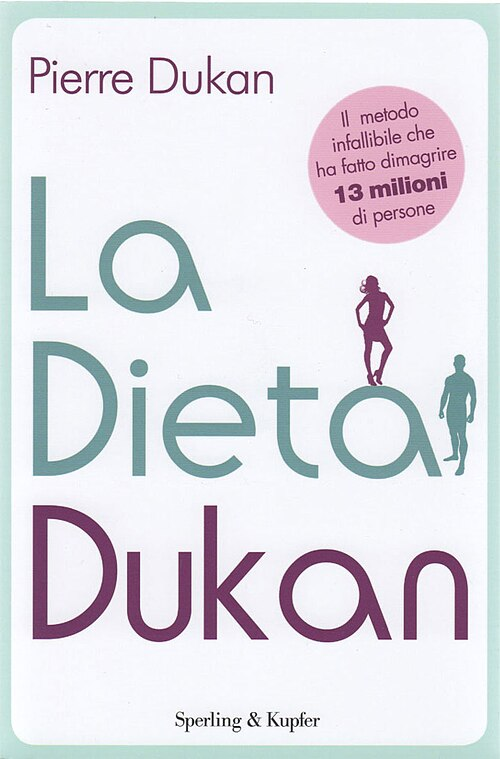
A four-phase, high-protein, very low-carb plan created by Pierre Dukan. It cycles from strict “protein-only” days toward gradual food reintroduction and a long-term maintenance pattern that includes one weekly “pure protein” day and daily oat bran. The phases: Attack → Cruise → Consolidation → Stabilization.
What it costs: The diet itself is free — it can be followed from the books or published guidance with no purchase required, which is why it scores well on cost. The official Dukan site sells an optional personalised coaching programme at around $29.95/month (price as of July 2026), adding daily check-ins and monitoring through the first three phases. Nothing in the plan depends on buying it.
How the Four Phases Work
Attack (2–5+ days)
- Unlimited lean proteins (poultry, fish/seafood, eggs, fat-free/low-fat dairy)
- ~1.5 Tbsp oat bran daily, plenty of water, short daily walk
- Rapid loss here is largely water weight from carb restriction
Cruise
- Alternate protein-only days with protein + non-starchy vegetables
- ~2 Tbsp oat bran daily; continue daily activity
- Often framed as ~3 days in Cruise per pound you aim to lose
Consolidation
- Goal: prevent regain while reintroducing carbs gradually
- Add limited fruit, whole-grain bread, small amounts of cheese and starches
- Allow 1–2 “celebration meals” per week
Stabilization (long-term)
- Eat broadly but keep one pure-protein day per week
- ~3 Tbsp oat bran per day and daily movement
What You’ll Eat (Snapshots)
- Allowed early: very lean meats, fish/seafood, eggs, fat-free/low-fat dairy; non-starchy veg appear in Cruise
- Oat bran: favored for fullness and fiber; oats’ beta-glucan is linked with LDL-cholesterol reduction (oats in general, not Dukan-specific)
Pros
- Fast initial results can motivate some dieters
- Clear rules/structure (no calorie counting)
- Encourages daily walking and adequate water
Cons & Risks
- Very restrictive and not nutritionally balanced in early phases; long-term adherence is difficult
- High protein can be an issue for at-risk groups (e.g., chronic kidney disease); get medical guidance
- Rapid-loss promises aren’t aligned with mainstream guidance (~1–2 lb/week is recommended for maintenance)
Gluten-free note: Oats/oat bran can fit a gluten-free pattern only if certified gluten-free. Cross-contamination is common, and a small subset of people with celiac disease react even to GF oats.
Who Might Consider It
Adults seeking a short, highly structured reset and who enjoy lean-protein foods — with medical clearance if they have kidney or metabolic conditions. Evidence for long-term success is limited; plan your exit to a more balanced pattern.
Better-Balanced Alternatives
Consider broadly supported patterns (e.g., Mediterranean-style) emphasizing fruits/veg, whole grains, legumes, moderate protein, and healthy fats — aligning with gradual, sustainable loss.
FAQs
Is the Dukan Diet healthy?
It can produce short-term loss, but early phases are imbalanced. Not ideal for long-term use without careful planning; consult a clinician if you have medical conditions.
How long should the Attack phase last?
Commonly 2–5 days (up to ~10), depending on goals and guidance. Longer isn’t necessarily better.
What’s different from Atkins?
Dukan emphasizes lean protein and low fat with oat bran; classic Atkins allows more dietary fat and has different carb rules.
Can you do Dukan gluten-free?
Yes, if you use certified gluten-free oat bran and suitable products. Always check labels.
Is Dukan suitable for people with diabetes?
Lower carbs can help some people, but strict phases may not suit everyone. Medical supervision is recommended.
Disclaimer
This review is informational and not medical advice. Check with your clinician or a registered dietitian before starting any restrictive plan—especially if you have kidney disease, diabetes, gout, are pregnant, or have a history of disordered eating.
© 2026 by RatingDietPlans.com, All rights reserved. No part of this document may be reproduced or transmitted in any form or by any means, electronic, mechanical, photocopying, recording, or otherwise, without prior written permission.
The post Dukan Diet Review: Phases, Pros & Cons, Safety appeared first on Rating Diet Plans.
]]>The post Jillian Michaels “The Fitness App” Review: Price, Meal Plans, Workouts, Pros & Cons appeared first on Rating Diet Plans.
]]>Jillian Michaels’ program has evolved into a fully featured mobile and TV fitness and nutrition app with structured plans, a flexible meal planner, streaming access to her classic DVD programs, and a 7-day free trial. If you want trainer-style structure at home—without prepackaged meals—this is one of the strongest all-in-one options right now.
Quick Verdict
Best for: Self-motivated beginners to advanced home exercisers who want a plan for both workouts and meals.
Skip if: You want done-for-you food delivery or gentle, hands-off coaching.
What You Get
Training
- Structured programs from beginner to advanced (HIIT, strength, yoga, mobility, prenatal/postnatal), with video form demos and audio coaching. Available on iOS, Android, Apple TV, and Samsung TV.
- Legacy DVD library streaming inside the app, including BodyShred, Body Revolution, 30 Day Shred, and more.
Nutrition
- Advanced Meal Planner that generates personalized plans and recipes; you shop and cook from app-made grocery lists (no boxed meals).
Tracking & Support
- Habit, weight, and workout tracking, plus community content and health integrations.
Pricing (July 2026)
$19.99 per month or $149.99 per year (about $12.50 a month), both with a 7-day free trial. The subscription renews automatically until cancelled, but there is no minimum term, no starter fee, and you can cancel any month through the site or your app store. Discounts of around 40% are advertised for students, teachers, military and healthcare workers. Re-verified July 2026 — unchanged from our previous check.
Note: You’ll occasionally see limited “lifetime” promotions via partners or social media; these are not the standard plan.
How It Works (Day-to-Day)
- Onboarding: Pick goals, level, available equipment, and schedule. The app builds your weekly plan.
- Train: Follow the calendar (typically 5–6 days per week) with guided warm-ups and cool-downs.
- Eat: Use the meal planner to generate menus and grocery lists; swap recipes to fit preferences and calorie needs.
Pros
- All-in-one solution for workouts and meal planning.
- Large content library with new programs and classic DVDs.
- Works for home or gym users at any fitness level.
- 7-day free trial to test before paying.
Cons
- No prepared meals—you must shop, cook, and track.
- Jillian’s high-intensity coaching style isn’t for everyone.
- Subscription model; lifetime deals are limited-time only.
How It Compares: Jillian vs. WW vs. Noom
| Feature | Jillian Michaels App | WeightWatchers (WW) | Noom Weight |
|---|---|---|---|
| Core Approach | Guided workouts and meal planner | Points-based food system with large recipe base and optional Workshops or medical clinic | Psychology-based lessons and habit tracking with optional coaching |
| Standard Pricing | $19.99/month or $149.99/year + 7-day trial | Around $23/month (frequent intro promos near $10/month for first 10 months) | Around $70/month or $209/year; current promos about $17.50/month for 12-month plan |
| Prepared Meals | No | No | No |
| GLP-1 Option | No | Yes, via WW Clinic (extra cost) | Yes, via Noom Med (cost varies) |
| Best For | Home exercisers wanting full training and nutrition plan | People who prefer structured tracking and community | Users focused on mindset and habit coaching |

Should You Choose Jillian Over WW or Noom?
Choose Jillian Michaels’ Fitness App if you want trainer-style programming with video workouts and a meal planner in the same app and don’t need a points system or medical supervision.
Choose WeightWatchers if you prefer an easy food framework, a huge recipe collection, and optional Workshops. WW also sells prescription medication tiers, which we do not count in its favour.
Choose Noom if you’re drawn to psychology-based lessons and daily habit change guidance.
Tips to Maximize Results
- Commit to 8–12 weeks on one program block before switching.
- Batch-cook once a week using the recipe hub to save time.
- Track something daily—consistency matters more than perfection.
- If a lifetime promo appears, compare it to one year of normal pricing.
FAQs
How much does The Fitness App cost?
$19.99 per month or $149.99 per year after a 7-day free trial. It renews automatically until canceled.
Does it include Jillian’s classic DVDs?
Yes. Subscribers can stream Jillian’s workout library including BodyShred, Body Revolution, and 30 Day Shred.
Are there prepared meals?
No. The app provides an Advanced Meal Planner, recipes, and grocery lists so you can shop and cook.
Are there lifetime deals?
Occasionally, partners run limited-time lifetime promotions. These are not the standard subscription.
Who is this best for?
Home exercisers who want structured workouts and a built-in meal planner, especially those who like Jillian’s coaching style.
A note on weight-loss medication. This review covers a company that offers medication tiers. RatingDietPlans rates diet plans. Where a programme offers prescription weight-loss medication, we note it, and we do not regard it as a point in the programme’s favour. This is our editorial position, not a clinical judgement — we are not qualified to make one — and it is kept out of our scores. It is not advice about your own medication. If you have been prescribed a weight-loss medication, decisions about starting, continuing or stopping it belong with your prescribing clinician and nobody else. See our medication policy.
© 2026 RatingDietPlans.com - All rights reserved. Information is provided for educational purposes only and does not constitute medical advice. Always consult your physician before starting any diet or fitness program.
The post Jillian Michaels “The Fitness App” Review: Price, Meal Plans, Workouts, Pros & Cons appeared first on Rating Diet Plans.
]]>